 Corterra Book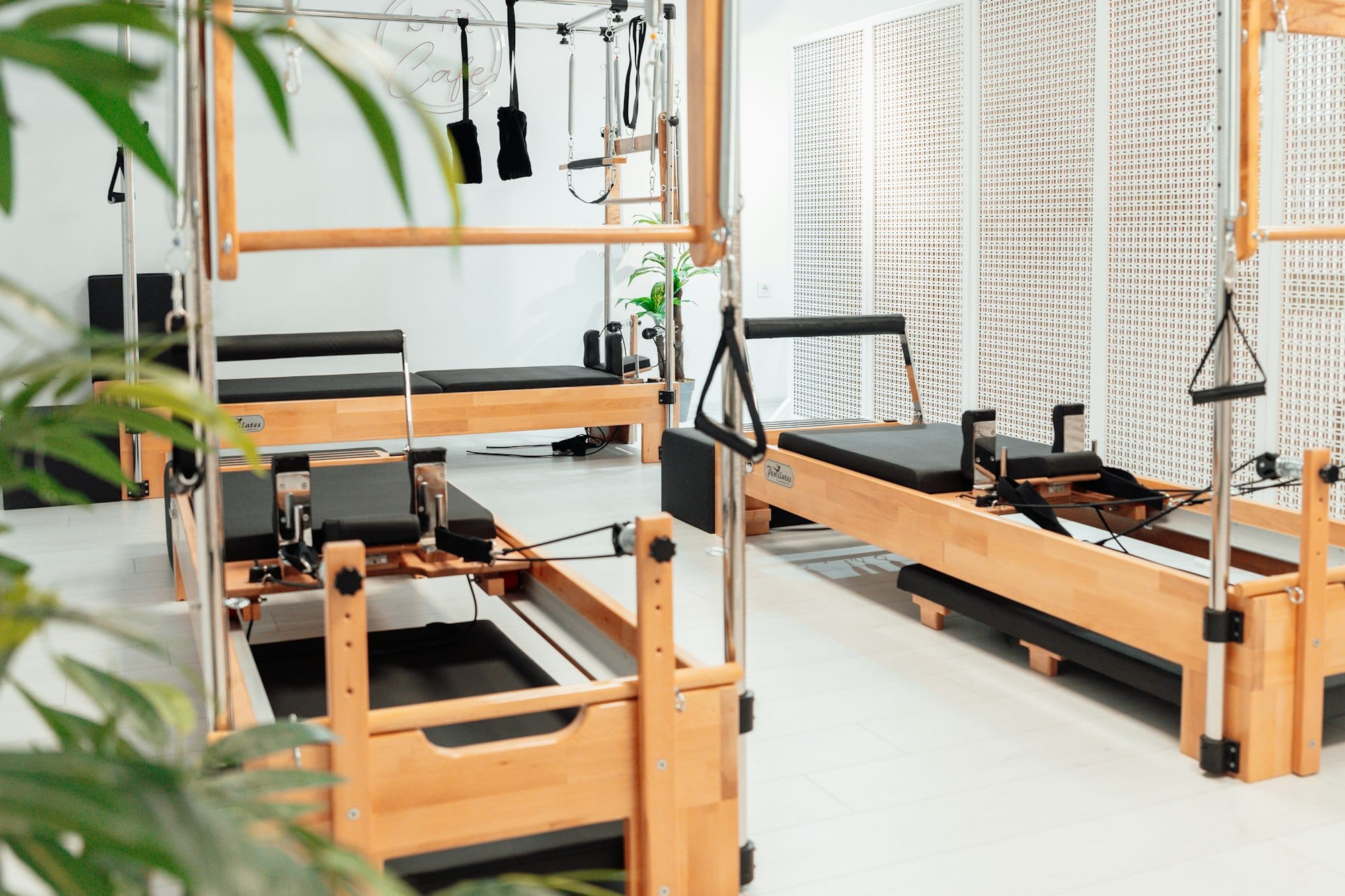
The first result for this search is worth reading before any vendor page: a peer-reviewed survey run by PilatesBridge, which found the highest-rated platforms among actual studio owners were WellnessLiving, Momence, and Walla. Below it sit four separate forum threads, three on Reddit and one in a studio owners' group, all asking the same question. Vendor pages fill the gaps.
What is missing is the requirements list: the specific things to test, in the order they matter, so that a demo tells you something. That is what this is.
We make Corterra Book, and it is genuinely not the right answer for most pure pilates studios. We will say exactly where it is and is not, and name who fits better, because a requirements list from a vendor is only worth reading if it does that.
The fact that decides everything
A reformer is equipment, not a person. That sounds obvious and it is the single most consequential thing about scheduling a pilates studio, because nearly every platform in the wider wellness category was built on the assumption that what gets booked is a practitioner's hour.
In a mat class, that assumption is fine. The constraint is the instructor and the floor, capacity is a number you pick, and any class-based system models it correctly.
In a reformer studio the constraint is the machines. You have eight reformers, so the class holds eight people, and the ninth booking is not a scheduling preference, it is a person standing in a room with nowhere to lie down. The capacity number is not chosen, it is counted off the studio floor. That distinction has three practical consequences:
- Capacity is a property of the room, not the class. Two different classes in the same room have the same ceiling. If the platform stores capacity on the class rather than the space, you maintain the same number in several places and they drift.
- Equipment can be out of service. A reformer under repair drops every class in that room by one until it is fixed. Ask how that is expressed, because in most systems the answer is that you edit every affected class by hand.
- Some studios need the specific machine, not just a seat. This is spot booking, and it is the dividing line below.
Spot booking versus capacity, and which you need
These get conflated in demos and they are different features.
Capacity booking means the class holds eight and the system stops at eight. Whoever arrives lies on whichever reformer is free. This is what most platforms mean when they say they support classes, and for a lot of studios it is sufficient.
Spot booking means the client picks reformer four when they book, sees the layout, and gets that machine. Momence sells this as spot scheduling and Walla advertises reformer scheduling specifically, which tells you the demand is real.
Spot booking matters if regulars have a preferred position, if you run tiered pricing by location in the room, if a client needs to be near the instructor or away from the door, or if you have mixed equipment where two of the eight are towers rather than reformers. It matters much less if your classes are small and your clients are indifferent about which machine they get.
Decide which of the two you need before the first demo, because it eliminates about half the market immediately and it is expensive to discover afterward.
The rest of the list, in the order it matters
| Requirement | What to ask in the demo | Why it matters here specifically |
|---|---|---|
| Waitlist with auto-promotion | Class is full, someone cancels at 6am. What happens without staff involvement? | Table stakes for a class studio. A full class with a cancellation and no auto-promotion is an empty reformer you were paid nothing for. Ask whether promotion is automatic and how the client is notified. |
| Late cancel and no-show enforcement | Cancel inside the window. Does a fee or a class credit actually get taken? | Studio economics depend on this working without a conversation. It needs a card on file and consent captured at booking, or you are chasing people. |
| Class packs and memberships together | A client on an unlimited membership and a client on a ten-pack book the same class. | Both are normal and they draw down differently. Check that pack balances are visible to the client and to the front desk, and what happens when a pack expires mid-cycle. |
| Instructor substitution | Your 9am teacher is sick. How many steps to reassign and notify? | Happens weekly. Momence sells automated substitution as a paid add-on, which is a fair signal of how much manual work it otherwise is. |
| Series and course enrolment | A six-week beginner series where people commit to all six. | Different from a drop-in class and often badly supported. If you run intro courses, test this specifically. |
| Recurring class schedule editing | Move the Tuesday 6pm permanently. Then cancel one single Thursday for a holiday. | Two different operations that many systems conflate. The second one, cancelling a single occurrence and telling the people booked into it, is the one that is usually missing. |
| Instructor pay and revenue by teacher | Which teacher generated what, and at which rate? | Pay is often per head or tiered by attendance. If the platform cannot report revenue per instructor, you are doing payroll off a spreadsheet. |
| On-demand and livestream | Do you need it, and is it included or an add-on? | Post-2020 this is either central to your model or irrelevant. It is a large price differentiator, so decide before you shop rather than paying for it by default. |
| Mindbody migration | Who moves the client list, memberships, and pack balances, and what does it cost? | Most studios shopping here are leaving Mindbody. Walla advertises migration as a selling point; Momence includes it only on its quoted Custom tier. Ask before signing, not after. |
Pricing, as advertised
Only some of this category publishes real numbers, so treat the gaps as information. Figures are as advertised at the time of writing.
| Subscription | Payment processing | Notes | |
|---|---|---|---|
| Momence | Free, $60, or $199/mo by tier; top tier quoted | 3.9% plus 30 cents online, 3.7% plus 5 cents in person, 1.8% ACH | Free tier carries a 5% transaction fee and a 4% service fee, so it is revenue share rather than free. Marketing, leads, reviews, referrals, substitutions, and on-demand are all separate paid add-ons. |
| StudioBookings | From $25/mo, all features included | Not published | Positions explicitly on pilates and barre. |
| Walla | Advertises transparent pricing, figure not published on the page | Not published | Advertises reformer scheduling and Mindbody migration directly. |
| Mariana Tek | Quote only | Not published | Enterprise-leaning. Owner feedback in r/pilates describes it as strong on the client side, pricey, with a backend that can feel clunky. |
| Corterra Book | $40 or $80/mo | Your own Stripe rate, plus 15 cents | No percentage of revenue. No on-demand video, no waitlist, no spot booking. See below. |
The pattern to notice: subscription is the number vendors compete on and processing is where the money actually goes. Momence at 3.9% plus 30 cents online is roughly a point above a standard pass-through card-not-present rate. On $30,000 a month that is about $300 more than a pass-through model, every month, before any subscription. A free or cheap tier attached to an elevated processing rate is usually the expensive choice, and the arithmetic only becomes visible after you have migrated.
Which platform fits which studio
- Pure class studio, want the highest owner satisfaction: the PilatesBridge survey points at WellnessLiving, Momence, and Walla. That is peer data from studio owners rather than a vendor claim, and it is the best starting shortlist available.
- Reformer studio that needs spot booking: Momence or Walla, both of which sell it explicitly.
- Leaving Mindbody and worried about the migration: Walla advertises it hardest. Confirm who does the work and what happens to pack balances.
- On-demand or livestream is central: Momence or WellnessLiving. Budget for it as an add-on rather than assuming it is included.
- Multi-location and enterprise: Mariana Tek, with the caveat above about backend friction.
- Tight budget, simple needs, all-in pricing: StudioBookings at $25 is the cheapest credible published number in this list.
Where Corterra Book fits, and where it doesn't
We are going to be unusually blunt here, because for most studios reading this the answer is one of the platforms above.
Where it does not fit:
- No waitlist. For a class-based studio this is close to disqualifying on its own, and it is the first thing on the requirements table for a reason. If your classes fill, you need it, and we do not have it.
- No spot booking. Our class capacity is a seat count per occurrence, so the system will stop at eight but a client cannot choose reformer four.
- No on-demand video or livestreaming. Not on the roadmap.
- No automated instructor substitution, no loyalty program, no referral engine, no review requests, no lead capture, no marketing automation suite, and no payroll or accounting sync.
- No consumer marketplace. If your problem is that not enough people in your city know you exist, Mindbody's directory is a channel none of the independents replicate.
The one case where it does fit: a studio whose revenue is no longer only classes. Specifically, a pilates or barre studio that has added, or is about to add, recovery services: an infrared sauna, a cold plunge, a contrast suite, a compression or red light room. That combination is increasingly common because recovery fills the hours between classes with revenue that does not need an instructor on the floor, and it is where class platforms start to strain.
The reason is the same equipment insight from the top of this article, pushed one step further. A class platform models a group session led by a teacher at a fixed time. A sauna is a room that seats six with nobody teaching, running continuously rather than on a timetable, and a cold plunge is a single-occupancy room with no staff attached at all. Two ways platforms fail that, and they fail differently:
- A single-occupancy room can be faked, at a cost. A plunge or a compression chair has capacity one, which matches a staff calendar well enough that nothing looks broken, so you create an instructor called Plunge 1. Then you are paying per calendar for a space that draws no wage, you cannot require a room and a person independently, its hours are tied to a shift rather than the front desk, and revenue-by-instructor is now polluted with rooms that are not people.
- A shared room cannot be faked at any price. A sauna seating six on a rolling basis is not a class with a start time and not a person with a calendar. Listing it as a fitness class is the usual workaround, and it breaks as soon as people want to arrive at 3:10 rather than 3:00.
Both matter and neither ranks above the other, since a studio adding recovery generally adds both in the same room count. If that is your two-year plan, weigh it while you are choosing, because migrating after you have a membership base is far worse than choosing for the destination. If it is not your plan, take one of the class platforms above with our blessing.
Two more caveats if you do look at us: several separate service calendars, which is what a studio with three rooms needs, is the $80 Pro plan rather than the $40 one. And below roughly $700 a month in card volume, a free percentage-fee plan beats our $40.
FAQ
What is the best software for managing a pilates studio? The PilatesBridge owner survey found WellnessLiving, Momence, and Walla rated highest, which is the most useful peer data available. Which of the three fits depends on whether you need spot booking for individual reformers, whether on-demand video is central to your model, and whether you are migrating off Mindbody.
What is spot booking, and do I need it? Spot booking lets a client reserve a specific reformer rather than just a place in the class, choosing from a layout of the room. You need it if regulars have preferred positions, if you price by position, or if your equipment is mixed so that not every spot is the same machine. If your classes are small and clients are indifferent, plain capacity booking is enough and it widens your options considerably.
How much does pilates studio software cost? Published subscriptions run from about $25 a month at the low end to $199 for a single-location business tier, with enterprise platforms quote-only. The larger cost is usually payment processing, which ranges from a pass-through card rate to about 3.9% plus 30 cents. At $30,000 a month in card volume, a one-point difference in processing is roughly $300 monthly, more than most subscriptions.
Is there free pilates studio software? Some platforms advertise a free tier, but read the fee structure. Momence's Basic tier, for example, is free on subscription while carrying a 5% transaction fee and a 4% service fee on top of processing, which makes it a revenue-share arrangement. For a studio doing meaningful volume that is usually more expensive than a paid subscription with a normal card rate.
Does barre studio software differ from pilates studio software? Mostly not, and the same platforms serve both, which is why several vendors run one page for the pair. The one real difference is equipment: a barre studio is generally constrained by floor space and barre positions rather than by machines, so spot booking matters less and plain capacity booking is usually fine.
What should I ask about migrating off Mindbody? Who performs the migration, whether it costs extra, and specifically what happens to outstanding class pack balances and active memberships. Client lists move easily and balances are where migrations go wrong. Walla advertises migration as a differentiator; Momence includes it only on its quoted top tier.
Can one platform handle both classes and recovery rooms like a sauna or plunge? Some can, but it is worth testing rather than assuming, because a class and a room are different objects. A class has a start time and an instructor; a sauna is a space with a seat count that people use on a rolling basis, and a plunge is a single-occupancy room with no staff attached. Ask how the platform represents a bookable room with nobody teaching, and whether capacity for that room lives on the room or on each session.
Adding recovery services to a studio? Start a 15 day free trial at corterrabook.com and see classes and capacity rooms on one calendar. If you only run classes, take one of the platforms above instead.